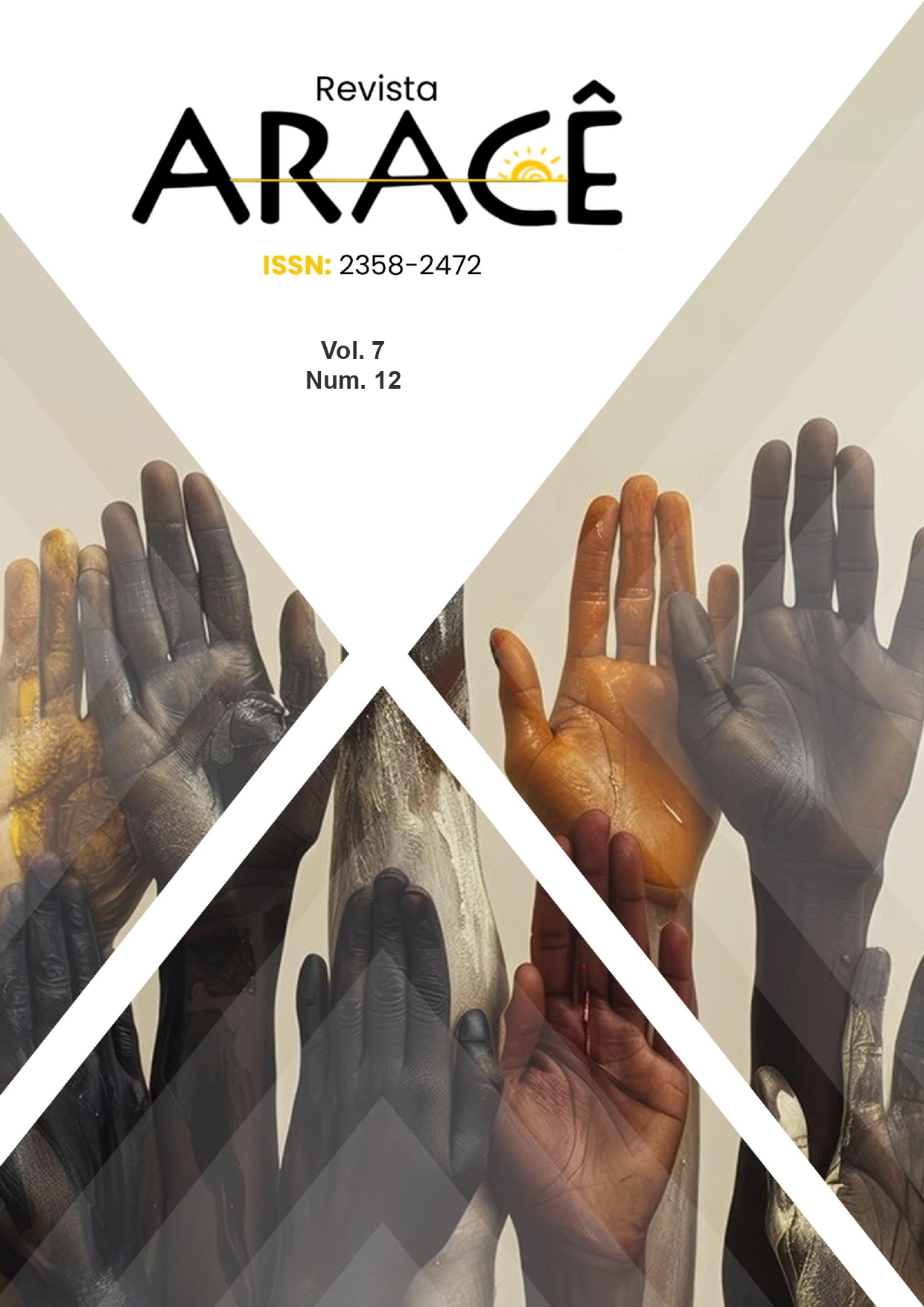
THE PRAYER, THE HERBAL BATH – QUILOMBOLA AND INDIGENOUS TRADITIONAL KNOWLEDGE FOR PSYCHIC HEALTH: PRAYERS, HERBS, BLESSINGS, AND COMMUNITY HEALING PRACTICES IN THE FACE OF RACISM, DISPLACEMENT, AND STRUCTURAL VIOLENCE
DOI:
https://doi.org/10.56238/arev7n12-339Keywords:
Traditional Knowledge, Psychic Health, Community Healing Practices, Structural RacismAbstract
In contexts marked by structural racism, territorial expropriation, forced displacement, and multiple forms of historical violence, quilombola and Indigenous populations have persistently mobilized traditional knowledge as strategies of care, resistance, and preservation of life. Practices such as prayers, herbal baths, blessings, and community healing rituals constitute not only therapeutic resources but also expressions of a distinct cosmology, in which psychic health, body, territory, ancestry, and collectivity are articulated in an inseparable manner. In this sense, the article is grounded in the recognition that such practices challenge hegemonic and individualizing biomedical conceptions of mental health, affirming modes of care rooted in collective memory, community belonging, and ancestral spirituality. The object of this article is the analysis of quilombola and Indigenous traditional knowledge related to community healing practices – such as prayers, the use of medicinal herbs, blessings, and collective rituals – as dispositifs of psychic health care and of confrontation with the effects of racism, territorial uprooting, and structural violence. By engaging with critical perspectives from collective health, anthropology, decolonial studies, and traditional knowledge systems, the text seeks to understand these practices as social technologies of care, capable of producing meaning, symbolic protection, subjective strengthening, and the recomposition of community bonds. The guiding research question is: to what extent do quilombola and Indigenous traditional knowledges, expressed through community healing practices, contribute to the promotion of psychic health and to collective resistance in the face of structural violence imposed by racism and coloniality? Theoretically, the study draws on the works of Arthur Kleinman (1995; 2020), Nancy Scheper-Hughes (1993), Paul Farmer (1998; 2003), Cecil Helman (1984), Franco Basaglia (1968; 2005), Achille Mbembe (2017; 2018; 2021), Frantz Fanon (1980; 2008; 2022), Lélia Gonzalez (2017; 2018; 2020; 2022), Kabengele Munanga (2005; 2015; 2019), Clóvis Moura (1988; 1994; 2020), Gloria Anzaldúa and Cherríe Moraga (1990; 2022), Viveiros de Castro (1992; 2007; 2009; 2014), Davi Kopenawa and Bruce Albert (2013; 2019), Ailton Krenak (2019; 2020), Daniel Munduruku (2005; 2013), Juana Elbein dos Santos (1986), Vicente Parizi (2020), Hertz Wendel de Camargo (2019), Gustavo Wada Ferreira (2022), among others. The research adopts a qualitative approach (Minayo, 2007), with a descriptive and bibliographic design (Gil, 2008), and a comprehensive analytical perspective (Weber, 1949). The findings indicate that prayers, herbal baths, blessings, and community rituals operate as collective dispositifs of psychic health care among quilombola and Indigenous populations, articulating body, spirituality, territory, and ancestry. These practices contribute to the reduction of psychic suffering associated with structural racism, displacement, and historical violence, while simultaneously strengthening community bonds and collective identities. Their character as forms of epistemological resistance to individualizing biomedical hegemony is also evidenced. Recognizing these knowledges broadens the understanding of health care and points toward more plural and antiracist models.
Downloads
References
ALBERT, B.; KOPENAWA, D. A queda do céu: palavras de um xamã yanomami. São Paulo: Companhia das Letras, 2013.
ALBERT, B.; KOPENAWA, D. O espírito da floresta. São Paulo: Companhia das Letras, 2019.
ANZALDÚA, G. Borderlands/La frontera: the new mestiza. San Francisco: Aunt Lute Books, 2012.
ANZALDÚA, G.; MORAGA, C. This bridge called my back: writings by radical women of color. Albany: SUNY Press, 1990.
ANZALDÚA, G.; MORAGA, C. Esta ponte chamada minhas costas: escritos de mulheres radicais de cor. São Paulo: Elefante, 2022.
BANIWA, G. O índio brasileiro: o que você precisa saber sobre os povos indígenas no Brasil de hoje. Brasília: LGE Editora, 2018.
BASAGLIA, F. A instituição negada. Rio de Janeiro: Graal, 1968.
BASAGLIA, F. Escritos selecionados em saúde mental e reforma psiquiátrica. Rio de Janeiro: Garamond, 2005.
BOURGOIS, P.; SCHEPER-HUGHES, N. Violence in war and peace: an anthology. Oxford: Blackwell Publishing, 2004.
CAMARGO, H. W. Religiões afro-brasileiras, cuidado e saúde. São Paulo: Fonte Editorial, 2019.
DOS SANTOS, A. N. S. et al. A cruz que apaga os rastros ancestrais – a conversão evangélica e o desfiguramento da identidade indígena no Brasil. ARACÊ , [S. l.], v. 7, n. 2, p. 9747–9776, 2025. DOI: 10.56238/arev7n2-298. Disponível em: https://periodicos.newsciencepubl.com/arace/article/view/3561. Acesso em: 29 nov. 2025. DOI: https://doi.org/10.56238/arev7n2-298
DOS SANTOS, A. N. S. et al. Saberes que curam – a farmácia quilombola e o uso de plantas medicinais no cuidado infantil. ARACÊ, [S. l.], v. 7, n. 4, p. 19103–19135, 2025. DOI: 10.56238/arev7n4-199. Disponível em: https://periodicos.newsciencepubl.com/arace/article/view/4511. Acesso em: 29 nov. 2025. DOI: https://doi.org/10.56238/arev7n4-199
DOS SANTOS, A. N. S. et al. Educação escolar indígena – a disputa entre o saber dos povos ancestrais e a engrenagem da fábrica educativa do capital. ARACÊ, [S. l.], v. 7, n. 5, p. 23039–23078, 2025. DOI: 10.56238/arev7n5-128. Disponível em: https://periodicos.newsciencepubl.com/arace/article/view/4952. Acesso em: 29 nov. 2025. DOI: https://doi.org/10.56238/arev7n5-128
FANON, F. Os condenados da terra. Rio de Janeiro: Civilização Brasileira, 1980.
FANON, F. Pele negra, máscaras brancas. Salvador: EDUFBA, 2008.
FANON, F. Por uma revolução africana. São Paulo: Ubu Editora, 2022.
FERREIRA, G. W. Saberes tradicionais, corpo e território: práticas de cuidado em comunidades tradicionais. Curitiba: Appris, 2022.
FLICK, U. Introdução à pesquisa qualitativa. Porto Alegre: Artmed, 2009.
GIL, A. C. Métodos e técnicas de pesquisa social. São Paulo: Atlas, 2008.
GONZALEZ, L. Primavera para as rosas negras. São Paulo: Diáspora Africana, 2017.
GONZALEZ, L. Por um feminismo afro-latino-americano. Rio de Janeiro: Zahar, 2018.
GONZALEZ, L. Lugar de negro. Rio de Janeiro: Zahar, 2020.
GONZALEZ, L. Racismo e sexismo na cultura brasileira. São Paulo: Perspectiva, 2022.
GONZALEZ, L.; HASENBALG, C. Lugar de negro. Rio de Janeiro: Zahar, 2022.
HELMAN, C. Culture, health and illness. London: Wright, 1984.
KLEINMAN, A. Writing at the margin: discourse between anthropology and medicine. Berkeley: University of California Press, 1995. DOI: https://doi.org/10.1525/9780520919471
KLEINMAN, A. The soul of care: the moral education of a husband and a doctor. New York: Viking, 2020.
KRENAK, A. Ideias para adiar o fim do mundo. São Paulo: Companhia das Letras, 2019.
KRENAK, A. A vida não é útil. São Paulo: Companhia das Letras, 2020.
MINAYO, M. C. S. O desafio do conhecimento: pesquisa qualitativa em saúde. São Paulo: Hucitec, 2007.
MINAYO, M. C. S.; DESLANDES, S. F.; GOMES, R. Caminhos do pensamento: epistemologia e método. Rio de Janeiro: Fiocruz, 2002.
MOURA, C. Rebeliões da senzala. São Paulo: Ática, 1988.
MOURA, C. Dialética radical do Brasil negro. São Paulo: Anita Garibaldi, 1994.
MOURA, C. Sociologia do negro brasileiro. São Paulo: Perspectiva, 2020.
MUNANGA, K. Rediscutindo a mestiçagem no Brasil. Petrópolis: Vozes, 2005.
MUNANGA, K. Negritude: usos e sentidos. Belo Horizonte: Autêntica, 2015.
MUNANGA, K. Por que ensinar a história da África e do negro no Brasil hoje? São Paulo: Global, 2019.
MUNDURUKU, D. O caráter educativo do movimento indígena brasileiro. São Paulo: Paulinas, 2005.
MUNDURUKU, D. Educação indígena: do sonho ao projeto. São Paulo: FTD, 2013.
PARIZI, V. Saúde, território e saberes tradicionais. São Paulo: Hucitec, 2020.
SANTOS, J. E. Os nagôs e a morte: pade, asés e o culto egum na Bahia. Petrópolis: Vozes, 1986.
SANTOS, A. N. S. dos. et al. “O espectro da cor”: desvelando o racismo nacional na polifonia dos quilombos e das leis. Cuadernos De Educación Y Desarrollo - QUALIS A4, 16(7), e4984. Disponível em: https://doi.org/10.55905/cuadv16n7-151 Acesso em 29 dez. 2025. DOI: https://doi.org/10.55905/cuadv16n7-151
SANTOS, A. N. S. dos. et a. “Ordem de saúde, norma familiar”: entrelaçando os saberes técnico-científicos sanitaristas e o conhecimento cultural popular de medicina familiar no imaginário coletivo. OBSERVATÓRIO DE LA ECONOMÍA LATINOAMERICANA, 22(9), e6930. Disponível em: https://doi.org/10.55905/oelv22n9-202 Acesso em 29 dez. 2025. DOI: https://doi.org/10.55905/oelv22n9-202
SANTOS, A. N. S. dos. et al. Saúde coletiva e equidade – desafios e estratégias para um sistema de saúde inclusivo e sustentável. OBSERVATÓRIO DE LA ECONOMÍA LATINOAMERICANA, 23(2), e8946. Disponível em: https://doi.org/10.55905/oelv23n2-041 Acesso em 29 dez. 2025. DOI: https://doi.org/10.55905/oelv23n2-041
SANTOS, A. N. S. dos. et al. Os condenados da terra – Genocídio indígena, impunidade estrutural e os limites da justiça na proteção dos direitos humanos no Brasil. OBSERVATÓRIO DE LA ECONOMÍA LATINOAMERICANA, 23(3), e9330. Disponível em: https://doi.org/10.55905/oelv23n3-109 Acesso em 29 dez. 2025. DOI: https://doi.org/10.55905/oelv23n3-109
STAKE, R. E. Pesquisa qualitativa: estudando como as coisas funcionam. Porto Alegre: Penso, 2011.
VIVEIROS DE CASTRO, E. From the enemy’s point of view: humanity and divinity in an Amazonian society. Chicago: University of Chicago Press, 1992. DOI: https://doi.org/10.7208/chicago/9780226768830.001.0001
VIVEIROS DE CASTRO, E. A inconstância da alma selvagem. São Paulo: Cosac Naify, 2007.
VIVEIROS DE CASTRO, E. Metafísicas canibais. São Paulo: Cosac Naify, 2009.
VIVEIROS DE CASTRO, E. Perspectivismo e multinaturalismo na América indígena. São Paulo: Cosac Naify, 2014.
WEBER, M. Economia e sociedade. Brasília: UnB, 1949.