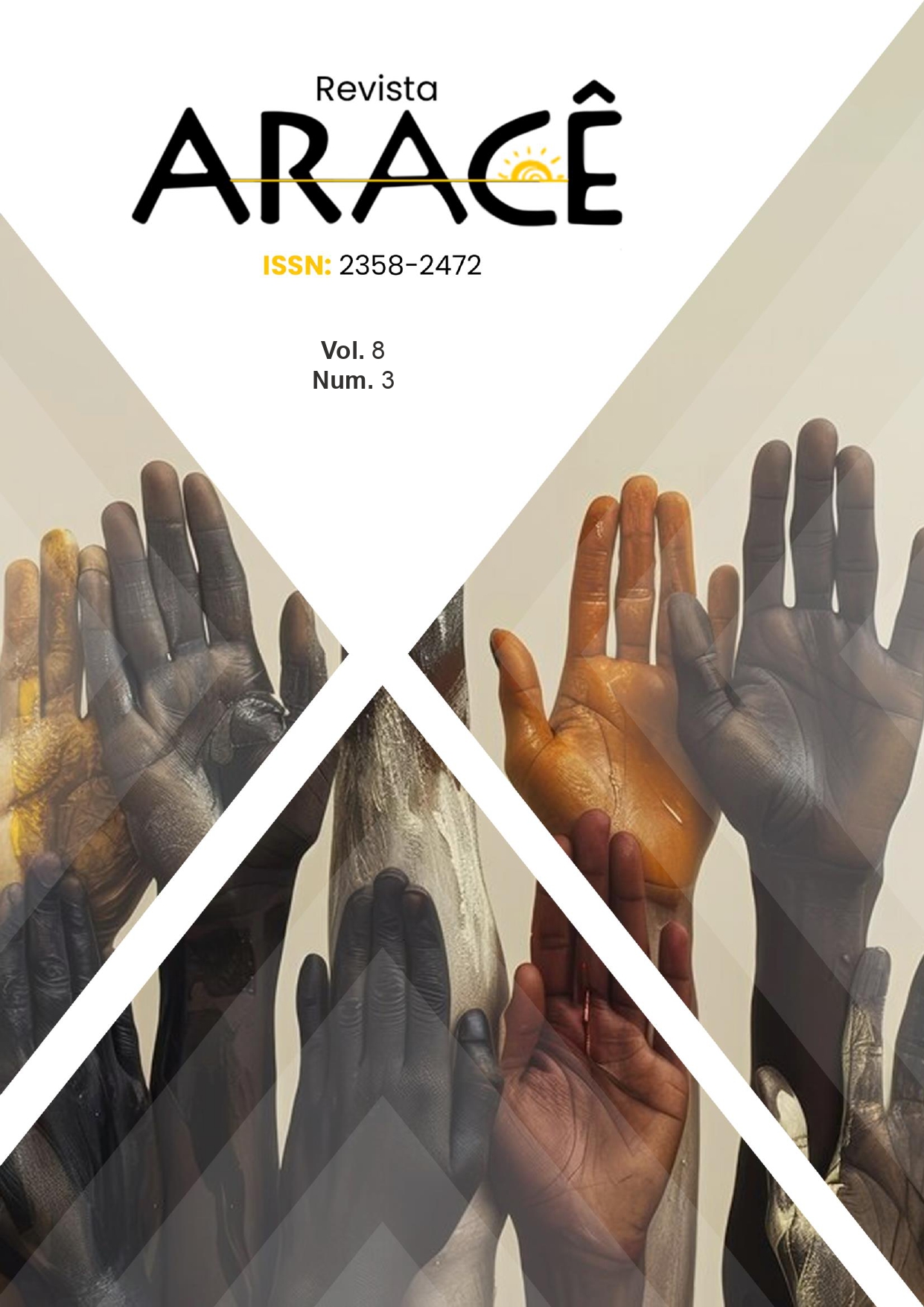
PERIPHERAL NARRATIVES AND EPISTEMIC DISPUTES: RAP AS KNOWLEDGE PRODUCTION IN THE BRAZILIAN BLACK EXPERIENCE
DOI:
https://doi.org/10.56238/arev8n3-122Keywords:
Coloniality of Knowledge, Rap, Education, Black ThoughtAbstract
Considering that Western modernity was historically constituted in close relation to processes of colonization, the racialization of bodies, and the global hierarchization of knowledge, it is possible to observe the consolidation of a pattern of power that determined which forms of knowledge would be recognized as universal and which would be marginalized or silenced. Within this context, peripheral cultural productions emerge that challenge these epistemic hierarchies and offer critical interpretations of social reality. The aim of this article is therefore to discuss the epistemological status of these cultural productions, particularly Brazilian rap, understanding it as a space for the critical elaboration of social experience and as a legitimate form of knowledge production. To this end, the study develops a theoretical analysis grounded in decolonial studies, Black thought, and the sociology of education, drawing on the contributions of authors such as Aníbal Quijano, Walter Mignolo, Catherine Walsh, Achille Mbembe, Lélia Gonzalez, Nilma Lino Gomes, Frantz Fanon, and Boaventura de Sousa Santos. The analysis indicates that rap particularly in the work of the group Racionais MC’s constitutes a field of intellectual production that articulates social denunciation, collective memory, and critical interpretations of the peripheral Black experience in Brazil. It is concluded that these cultural productions can be understood as relevant epistemic practices, contributing to the debate on the decolonization of knowledge and to the recognition of forms of knowledge historically marginalized within the field of education.
Downloads
References
BENTO, M. A. Pacto da Branquitude. Rio de Janeiro: Companhia das Letras, 2022.
BONILLA-SILVA, E. Rethinking racism: toward a structural interpretation. American Sociological Review, v. 62, n. 3, p. 465-480, jun. 1997.
FANON, F. Os condenados da Terra. Tradução de Serafim Ferreira. Lisboa: Ulisseia, 1961.
GOMES, N. L. O Movimento Negro educador: saberes construídos nas lutas por emancipação. Petrópolis, RJ: Vozes, 2017.
GONZALEZ, L. Feminismo afro-latino-americano. 2. ed. Rio de Janeiro: Zahar, 2020.
MIGNOLO, W. D. Colonialidade: o lado mais escuro da modernidade. Revista Brasileira de Ciências Sociais, v. 32, n. 94, p. e329402, 2017. Disponível em: https://www.scielo.br/j/rbcsoc/a/nKwQNPrx5Zr3yrMjh7tCZVk/abstract/?lang=pt. Acesso em: 7 mar. 2026.
QUIJANO, A. Colonialidade do poder, eurocentrismo e América Latina. Buenos Aires: Consejo Latinoamericano de Ciencias Sociales, 2005.
SANTOS, B. de S. Para além do pensamento abisssal: das linhas globais a uma ecologia de saberes. In: SANTOS, B. de S.; MENESES, M. P. (orgs.). Epistemologias do sul. Lisboa: Almedina, 2009. p. 23-72.
SANTOS, B. de S. Para uma sociologia das ausências e uma sociologia das emergências. Revista Crítica de Ciências Sociais, Coimbra, n. 63, p. 237-280, out. 2002.
SANTOS, B. de S.; MENESES, M. P. Prefácio. In: SANTOS, B. de S.; MENESES, M. P. (orgs.). Epistemologias do sul. Lisboa: Almedina, 2009. p. 5.
SOUZA, A. L. S. Letramentos de reexistência: poesia, grafite, música, dança: hip hop. São Paulo: Parábola, 2011.
WALSH, C.. Introducción. Lo pedagógico y lodecolonial: Entretejiendo caminos. In: WALSH, C. (ed.). Pedagogías decoloniales: Prácticas insurgentes de resistir, (re)existir y (re)vivir. Tomo I. Quito: Ediciones Abya-Yala, 2013.