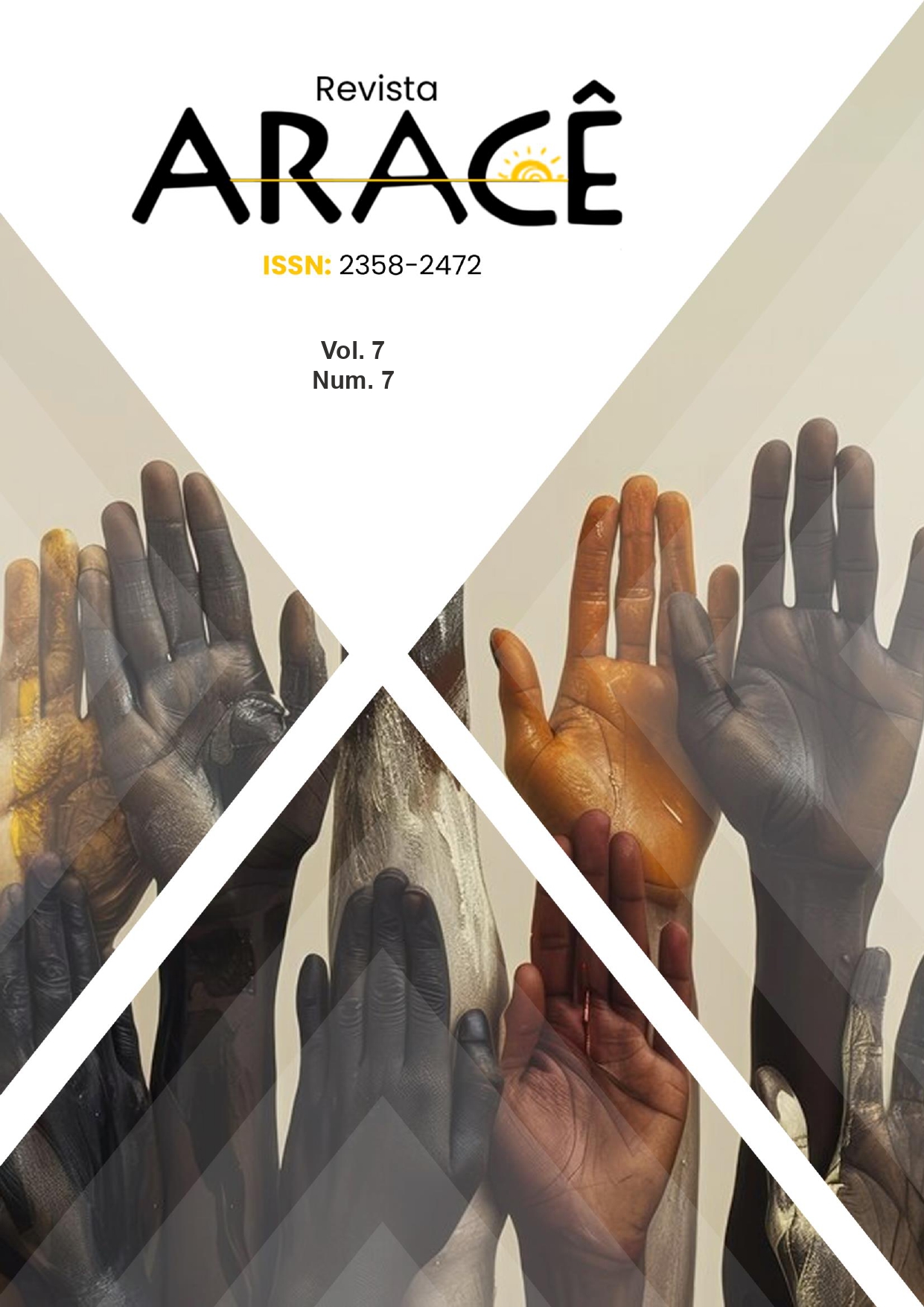
METODOLOGÍAS NEGRAS DE ENSEÑANZA – PEDAGOGÍAS DE TERREIRO, ENCRUCIJADAS Y DEL ENEGRECIMIENTO SEGÚN NILMA LINO GOMES, LÉLIA GONZALEZ Y BELL HOOKS
DOI:
https://doi.org/10.56238/arev7n7-101Palabras clave:
Metodologías Negras, Pedagogía Decolonial, Educación Antirracista, Currículo EnegrecidoResumen
RESUMEN
En un escenario educativo atravesado por profundas desigualdades raciales, epistemológicas y afectivas, las metodologías negras de enseñanza emergen como potentes posibilidades de ruptura y reinvención de los modos tradicionales de producir conocimiento. Así, este artículo se propone explorar los fundamentos y las prácticas de las pedagogías de terreiro, de las encrucijadas y del enegrecimiento, entendiéndolas no solo como alternativas didáctico-pedagógicas, sino como manifestaciones de resistencia, ancestralidad y afirmación identitaria. Además, cabe destacar que estas pedagogías se enraízan en territorios simbólicos y culturales históricamente marginados por la colonialidad del saber, encontrando en autoras como bell hooks, Lélia Gonzalez y Nilma Lino Gomes referentes ético-políticos y teóricos de gran relevancia. De este modo, el objeto de este estudio es el análisis crítico e interpretativo de las contribuciones de bell hooks, Lélia Gonzalez y Nilma Lino Gomes a la construcción de metodologías negras de enseñanza, con énfasis en los procesos de subjetivación, pertenencia y transformación social que estas perspectivas producen en los espacios escolares y comunitarios. El objetivo general, por tanto, es comprender cómo estas autoras tensionan las lógicas educativas convencionales y abren caminos para prácticas pedagógicas comprometidas con el enegrecimiento del currículo, la valorización de los saberes diaspóricos y la construcción de vínculos afectivos antirracistas. La pregunta que orienta esta investigación es: ¿de qué manera las pedagogías de terreiro, de las encrucijadas y del enegrecimiento, según bell hooks, Lélia Gonzalez y Nilma Lino Gomes, pueden transformar los espacios educativos en territorios de emancipación, pertenencia y dignidad para estudiantes negros y negras? El marco teórico central son los trabajos de hooks (2009; 2013; 2015; 2018; 2019), Gonzalez (1988; 2014; 2021) y Gomes (2007; 2011; 2012; 2017), utilizando como fuentes orbitales a Anzaldúa (2012; 2015; 2022), Moraga (2002; 2022), Fanon (2008; 2022), Collins (1999; 2004; 2006; 2012; 2016; 2019), Munanga (2015), Lobato (2021), Ratts (2014), Moraga y Anzaldúa (2002), Anzaldúa y Keating (2015), Moraga, Anzaldúa y Bambara (2002). La investigación es de naturaleza cualitativa (Minayo, 2007), bibliográfica y descriptiva (Gil, 2008), desde un enfoque analítico comprensivo (Weber, 1949). Los hallazgos revelan que las metodologías negras de enseñanza rompen con la pedagogía eurocéntrica al valorar el afecto, la ancestralidad y la pertenencia como principios formativos. Tales prácticas hacen posible reconfigurar la escuela como un territorio de dignidad y resistencia para estudiantes negros, desafiando el epistemicidio y movilizando vínculos colectivos y politizados de aprendizaje. Además, se identificó que estas pedagogías amplían el potencial educativo al integrar memoria, espiritualidad y cuerpo como fundamentos de un saber situado, insurgente y emancipador.
Descargas