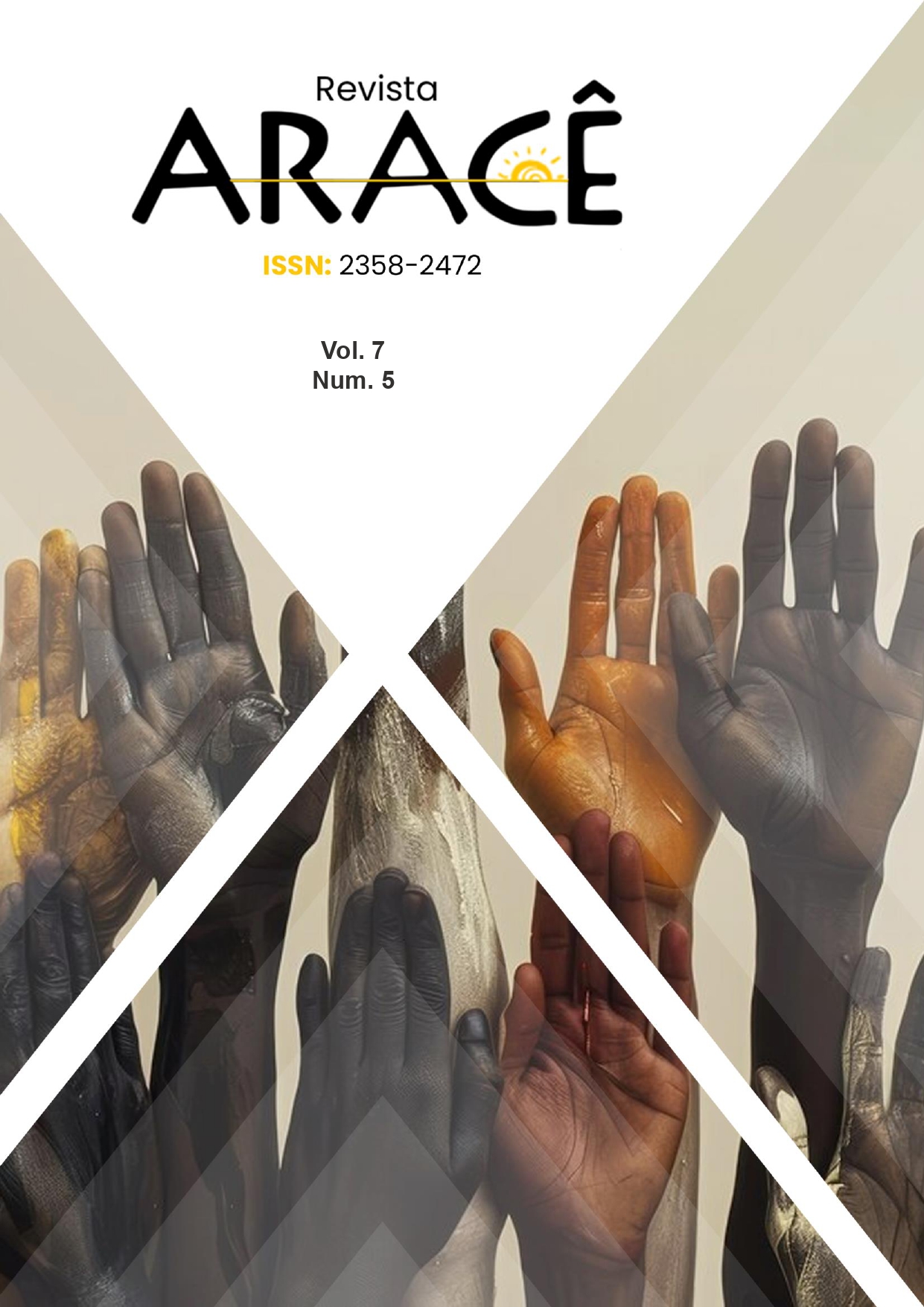
VOICES FROM THE PERIPHERY: SELF-AFFIRMATION AND (RE)EXISTENCE OF BLACK WOMEN IN A WORLD OF ANTAGONISM
DOI:
https://doi.org/10.56238/arev7n5-465Keywords:
Self-representation, Black Woman, Carolina, LiteratureAbstract
This work aims to reflect on the self-representation of Black women in Brazilian society, a society that still harbors racist attitudes and whose literary canon was constructed under a Eurocentric bias that excluded first-person narratives of Black women. The study develops particularly through a constant dialogue with the life story of Carolina Maria de Jesus, in Quarto de despejo: diário de uma favelada (2014), a Black woman who lived in the Canindé favela from the mid-1950s to the 1960s. Even amid exclusion, immersed in a world of antagonisms toward Afro-descendant women, Carolina wrote her diaries, believing she would one day publish them. And, indeed, she does. Amidst so many stereotypes that constantly circulate in discourse, images, and social thought, Carolina's writing emerges as a positive narrative of Black women, contributing to the affirmation of Black identity, especially Black women. This work, in seeking to bring these reflections to light, draws theoretical support from authors such as Evaristo (2005), Jodelet (2001), Moscovici (1978), Oliveira and Oliveira (2015), among others.
Downloads