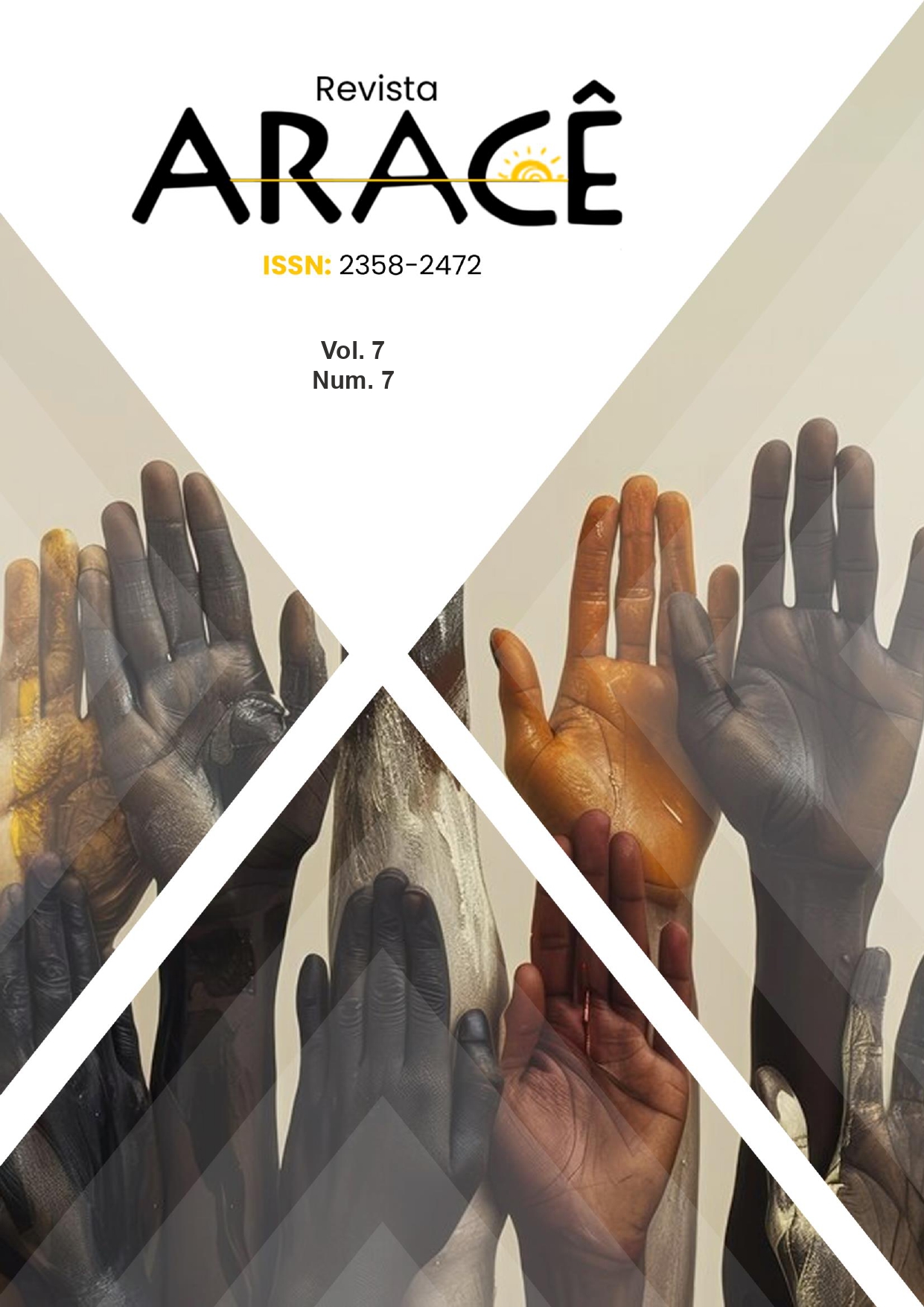
SABERES DECOLONIAIS – INSURGENTES DO "SUL GLOBAL" E A VIRADA DECOLONIAL COMO HORIZONTE PARA A TRANSFORMAÇÃO CRÍTICA DA EDUCAÇÃO CONTEMPORÂNEA
DOI:
https://doi.org/10.56238/arev7n7-285Palavras-chave:
Educação Decolonial, Epistemologias Insurgentes, Interculturalidade Crítica, ReexistênciaResumo
Em um mundo profundamente marcado por hierarquias epistêmicas herdadas da colonialidade do poder, a educação tem sido historicamente um dos principais instrumentos de manutenção das desigualdades. Ou seja, mais do que apenas transmitir conteúdos, o sistema educacional, em muitas partes do globo, tem reproduzido visões de mundo eurocêntricas, silenciando saberes, práticas e experiências dos povos do Sul global. Em outras palavras, a escola moderna ocidental, com seus currículos padronizados e sua lógica universalista, opera frequentemente como um aparato de apagamento de epistemologias que nascem do corpo, do território, da oralidade e da resistência. Assim, é fundamental observar que saberes insurgentes, forjados em lutas populares, espiritualidades ancestrais, movimentos sociais e territórios periféricos, emergem como forças potentes de reexistência e reconfiguração da prática educativa. Assim, este artigo tem como objeto de investigação os processos de insurgência epistêmica protagonizados por sujeitos do Sul global que, ao desafiarem o monopólio do conhecimento ocidental, constroem práticas educacionais pautadas na interculturalidade crítica e na desobediência epistêmica. A fim de analisar como essas práticas se articulam com a virada decolonial na educação, buscamos compreender em que medida elas oferecem horizontes reais para a transformação crítica da escola contemporânea. Nesse contexto, a pesquisa se orienta pela seguinte questão de partida: como os saberes insurgentes do Sul global, articulados com a virada decolonial, podem contribuir para a reconstrução de uma educação crítica, plural e comprometida com a superação das hierarquias coloniais de saberes? Para isso, utilizamos como repertório teórico as obras de Antunes (2009; 2021), Althusser (1970), Bessa Freire (2011), Dussel (2000; 2009), Escobar (2014; 2018), Fanon (2008; 2022), Frigotto (2001; 2010), Freire (1968; 1971), hooks (2013; 2015), Laval (2019), Laval e Dardot (2016), Mignolo (2006; 2010; 2012), Quijano (1992; 2000; 2002; 2020), Santos (2013; 2017), Simpson (2017), Smith (2007), Smith, Tuck e Yang (2019), Walsh (2013; 2019), entre outros. A pesquisa é qualitativa (Minayo, 2007), descritiva e bibliográfica (Gil, 2008) e com viés analítico compreensivo (Weber, 1949). Os achados indicam que o conhecimento insurgente tem promovido rupturas com a monocultura do conhecimento, reposicionando a escola como território de encruzilhadas epistêmicas. A interculturalidade crítica emerge como ferramenta de transformação, ressignificando currículos, práticas pedagógicas e a própria formação de professores. Valorizar o corpo, a espiritualidade, a oralidade e o território é essencial para a reconstrução de vínculos educativos mais justos. A virada decolonial, articulada à reexistência dos povos oprimidos, oferece as bases para uma ecologia de saberes que afirma o pluralismo epistêmico. Percebe-se, portanto, que a educação decolonial não é um complemento ao modelo vigente, mas um projeto alternativo de mundo.
Downloads