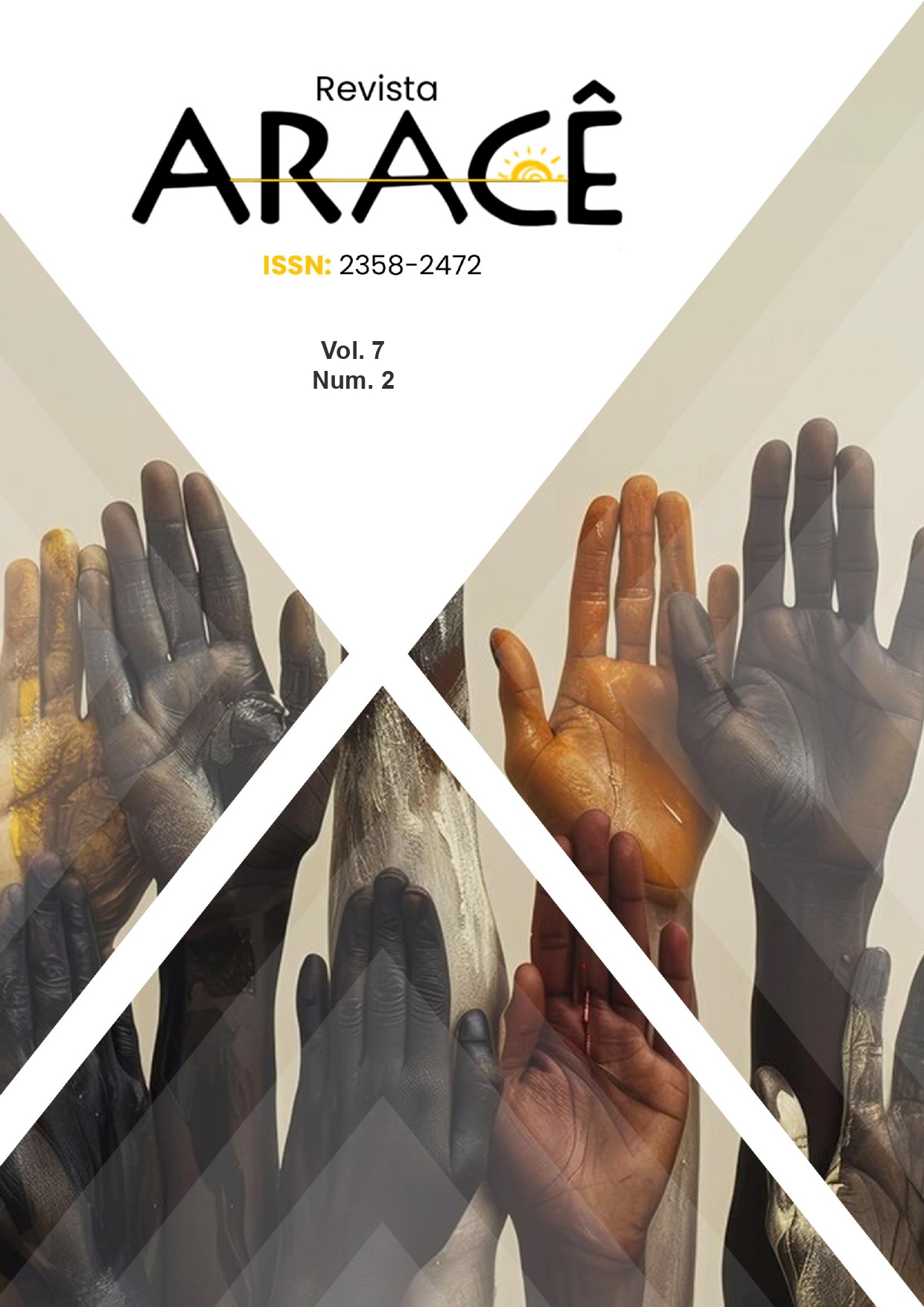
EDUCATION AND ETHNIC-RACIAL RELATIONS IN BRAZIL: MONOCULTURALISM AND THE CONSTRUCTION OF BLACK IDENTITY
DOI:
https://doi.org/10.56238/arev7n2-304Keywords:
Monoculturalism, Curriculum, IdentityAbstract
In Brazil, a country historically marked by structural racism, the school has been both a space for the reproduction of racial inequalities and a potential agent of social transformation. The monoculturalism present in Brazilian education makes it difficult to value black identities, reinforcing Eurocentric hegemony in school curricula and teaching materials and in this scenario, this study investigates the relationship between education and the construction of black identity in school spaces, highlighting challenges and possibilities for the promotion of ethnic-racial diversity. The justification for this research lies in the need to understand the impacts of monoculturalism on the identity formation of black students and in the search for more inclusive and representative pedagogical practices. After the implementation of Law 10.639/2003, which made the teaching of Afro-Brazilian History and Culture mandatory, new perspectives have been introduced into the educational debate, but there are still challenges in the implementation of these policies. The study adopts a qualitative approach, based on the bibliographic review of authors who discuss education, identity and ethnic-racial relations in Brazil. The results indicate that, despite the advances provided by educational policies, the presence of a Eurocentric curriculum and the absence of specific teacher training still limit the promotion of an anti-racist education. The research highlights the need for more effective actions, such as the reformulation of the curriculum, the expansion of teacher training and the encouragement of pedagogical practices that value Afro-Brazilian history and culture.
Downloads