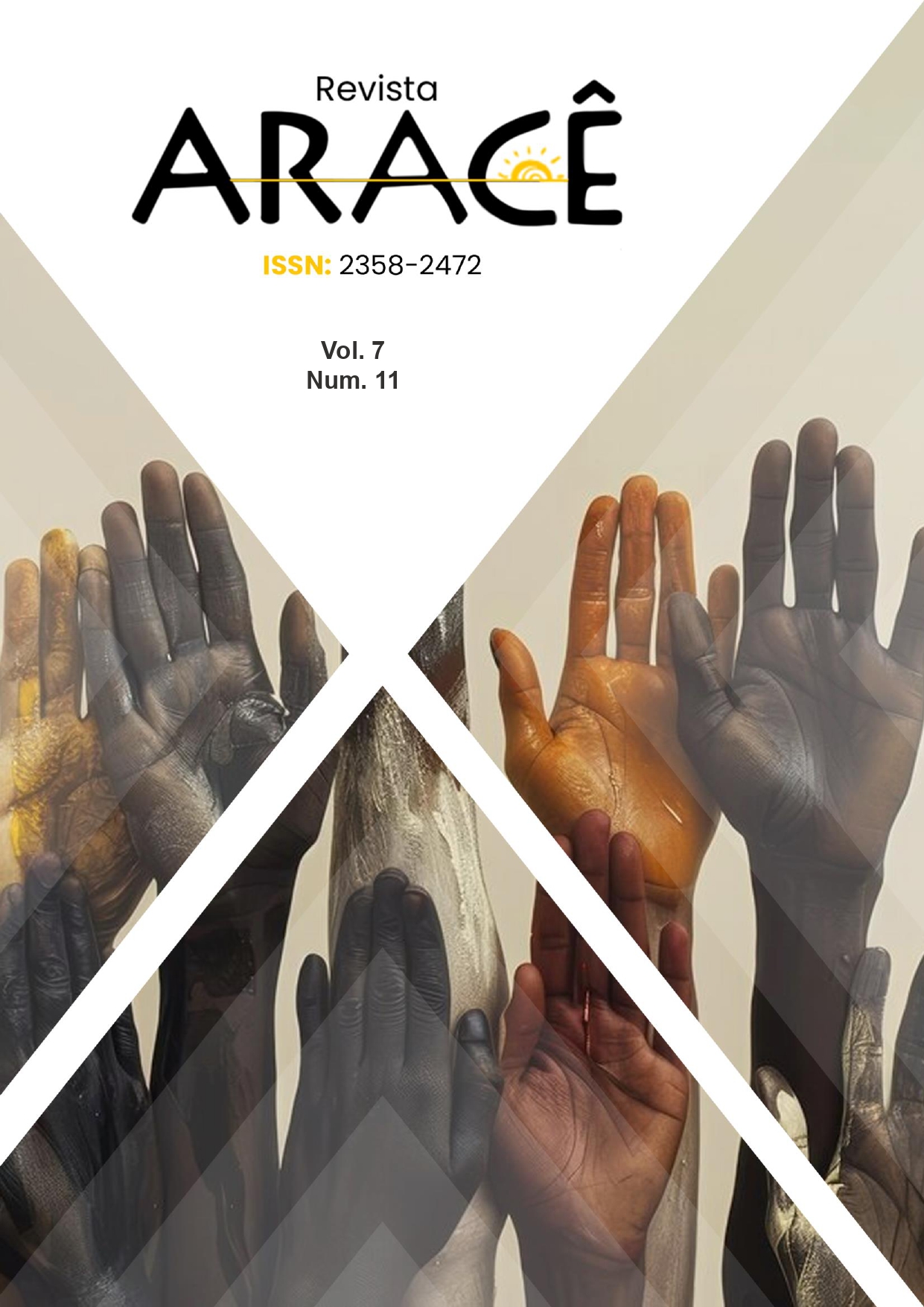
THE REVERSE SIDE OF THERAPEUTIC COMMUNITIES – THE IMPACT OF THE EXPANSION OF TCs ON ADOLESCENTS: RISKS OF DEATH, RIGHTS VIOLATIONS, AND THE REEMERGENCE OF ASYLUM PRACTICES UNDER THE GUISE OF “CURE”
DOI:
https://doi.org/10.56238/arev7n11-349Keywords:
Therapeutic Communities, Adolescents, Rights Violations, Asylum PracticesAbstract
The recent expansion of therapeutic communities (TCs) in Brazil has been accompanied by successive reports of systematic human rights violations, especially when children and adolescents are subjected to isolation, coercion, and violence under the discourse of “cure.” Official reports – such as those produced by the National Mechanism for the Prevention and Combat of Torture (MNPCT), in partnership with the Psychology and Ladinidades Group at the University of Brasília (UnB) – show that 100% of inspected TCs presented severe violations, including deprivation of liberty, physical aggression, threats with weapons, forced labor disguised as “work therapy,” religious violence, and the administration of controlled medication without technical criteria. In this context, the article analyzes the impact of the expansion of therapeutic communities on adolescents, understood as a group whose vulnerability is intensified by the illegal deprivation of liberty, the rupture of family bonds, the imposition of punitive and religious disciplinary practices, and the revival of asylum-based logics incompatible with the principles of the Brazilian Psychiatric Reform, the Psychosocial Care Network (RAPS), and the Child and Adolescent Statute (ECA/1990). Thus, the research aims to examine how the TC network operates as a device for managing poverty, youth, and drug use, producing concrete risks of death, institutional violence, and rights violations, while legitimizing itself through moralizing narratives of resocialization. Based on this framework, the guiding research question is: how has the expansion of therapeutic communities – coupled with state funding and regulatory gaps – produced a context of rights violations, institutional suffering, and the reactivation of asylum practices in the care of adolescents, and what are the consequences for the comprehensive protection guaranteed by Brazilian legislation? Theoretically, the study draws on works by Agamben (1995, 2007, 2014), Basaglia (1968, 1980, 1987, 2000, 2005, 2008, 2011, 2012, 2014, 2015, 2016, 2018), Becker (1998), Bourgois (2002), Butler (2004, 2009), Castel (1985), Cooper (1972, 1974), Foucault (2000, 2001, 2002, 2008, 2009, 2010, 2014), Goffman (1961, 1982, 1986, 2009, 2017), Hirdes (2008), Karam (1991), Szasz (1961, 1971, 1974, 1994, 2010), Silveira (1981, 1995, 2001), Velho (1985, 1998), Codato (2014), MNPCT Report (2025), among others. The research is qualitative (Minayo, 2008), bibliographic and descriptive (Gil, 2008), and guided by a comprehensive analytical approach (Weber, 1964). Findings show that therapeutic communities, far from representing spaces of care, function as environments of youth disciplining, where deprivation of liberty, institutional violence, and structured neglect constitute permanent risks to the lives and dignity of adolescents. The study demonstrates that the combination of accelerated expansion, loosely regulated state funding, and weak oversight creates a scenario in which asylum-based practices are revived under the discourse of “cure,” deepening trauma, severing bonds, and violating fundamental legal principles. It also shows that such institutions reinforce mechanisms of poverty governance, moralize psychic suffering, and consolidate contemporary forms of exclusion incompatible with the comprehensive protection provided by the ECA, RAPS, and the Psychiatric Reform. In summary, the research reveals that the continuity of this model deepens inequalities and legitimizes violence that, instead of promoting care, produces long-lasting harm and silences developing subjects.
Downloads
References
AGAMBEN, G. Homo sacer: il potere sovrano e la nuda vita I. Torino: Einaudi, 1995.
AGAMBEN, G. Quel che resta di Auschwitz: l’archivio e il testimone. Torino: Einaudi, 1998.
AGAMBEN, G. Opus Dei: archeologia dell’ufficio. Torino: Einaudi, 2012.
BASAGLIA, F. L’istituzione negata. Torino: Einaudi, 1968.
BASAGLIA, F. Scritti scelti di psichiatria e riforma manicomiale. Torino: Einaudi, 1980.
BASAGLIA, F. Conferenze brasiliane. Torino: Einaudi, 1987.
BASAGLIA, F. Intervento psichiatrico. Roma: Armando Editore, 2000.
BASAGLIA, F. La psichiatria alternativa. Milano: Feltrinelli, 2005.
BASAGLIA, F. Critica della psichiatria. Roma: Editori Riuniti, 2008.
BASAGLIA, F. Salute mentale e democrazia. Roma: Carocci, 2011.
BASAGLIA, F. Scritti politici. Milano: Mimesis, 2012.
BASAGLIA, F. Ordine psichiatrico e disciplina. Roma: Manifestolibri, 2014.
BASAGLIA, F. La psichiatria come pratica istituzionale. Roma: Armando Editore, 2015.
BASAGLIA, F. Politica e sofferenza. Roma: Carocci, 2016.
BASAGLIA, F. Istituzione, violenza ed esclusione. Torino: Einaudi, 2018.
BECKER, H. Tricks of the trade: how to think about your research while you're doing it. Chicago: University of Chicago Press, 1998.
BOURGOIS, P. In search of respect: selling crack in El Barrio. Cambridge: Cambridge University Press, 2002.
BRASIL. Ministério da Saúde. Rede de Atenção Psicossocial – RAPS: orientações técnicas. Brasília: Ministério da Saúde, 2022.
BUTLER, J. Precarious life: the powers of mourning and violence. London: Verso, 2004.
BUTLER, J. Frames of war: when is life grievable? London: Verso, 2009.
CASTEL, R. Les métamorphoses de la question sociale. Paris: Fayard, 1985.
CODATO, A. Como funciona a política. São Paulo: Brasiliense, 2014.
COOPER, D. The death of the family. Harmondsworth: Penguin Books, 1972.
COOPER, D. The grammar of living. London: Pantheon Books, 1974.
DOS SANTOS, P. G. S. et al. Psicotecnologia – da tela ao ansiolítico: tecnologias digitais, adoecimento mental e medicalização da vida universitária. ARACÊ, [S. l.], v. 7, n. 8, p. e7405, 2025. DOI: 10.56238/arev7n8-194. Disponível em: https://periodicos.newsciencepubl.com/arace/article/view/7405. Acesso em: 27 out. 2025.
DOS SANTOS, A. N. S. et al. Entre o Fim e o Infinito – formação e prática tanatológica no cuidado à morte e ao morrer em pacientes gravemente enfermos. ARACÊ, [S. l.], v. 7, n. 5, p. 27081–27137, 2025. DOI: 10.56238/arev7n5-352. Disponível em: https://periodicos.newsciencepubl.com/arace/article/view/5361. Acesso em: 27 out. 2025.
DOS SANTOS, A. N. S. et al. Prevenção ou Medicalização? Os desafios da atenção primária à saúde (APS) na era do rastreio populacional e da gestão de risco. ARACÊ, [S. l.], v. 7, n. 3, p. 15130–15161, 2025. DOI: 10.56238/arev7n3-287. Disponível em: https://periodicos.newsciencepubl.com/arace/article/view/4127. Acesso em: 27 out. 2025.
DOS SANTOS, A. N. S. et al. Psiquiatria e Racismo – O Holocausto psiquiátrico no hospício de Barbacena e o racismo contra negros no Brasil. ARACÊ , [S. l.], v. 7, n. 3, p. 14745-14776, 2025. DOI: 10.56238/arev7n3-265. Disponível em: https://periodicos.newsciencepubl.com/arace/article/view/4071. Acesso em: 27 out. 2025.
DOS SANTOS, A. N. S. et al. Desmedicar a Vida – um olhar crítico sobre doenças psíquicas, diagnósticos psiquiátricos e a expansão da medicalização no brasil. ARACÊ , [S. l.], v. 7, n. 2, p. 7636–7665, 2025. DOI: 10.56238/arev7n2-179. Disponível em: https://periodicos.newsciencepubl.com/arace/article/view/3365. Acesso em: 27 out. 2025.
FLICK, U. Qualitative Forschung: Ein Handbuch. Reinbek: Rowohlt, 2009.
FOUCAULT, M. Naissance de la clinique. Paris: Presses Universitaires de France, 1963.
FOUCAULT, M. Les mots et les choses. Paris: Gallimard, 1966.
FOUCAULT, M. L’archéologie du savoir. Paris: Gallimard, 1969.
FOUCAULT, M. Sécurité, territoire, population. Paris: Gallimard/Seuil, 2004.
FOUCAULT, M. L’herméneutique du sujet. Paris: Gallimard/Seuil, 2001.
FOUCAULT, M. Le gouvernement de soi et des autres. Paris: Gallimard/Seuil, 2008.
FOUCAULT, M. Surveiller et punir. Paris: Gallimard, 1975.
GOFFMAN, E. Asylums: essays on the social situation of mental patients and other inmates. New York: Anchor Books, 1961.
GOFFMAN, E. Interaction ritual. New York: Pantheon, 1967.
GOFFMAN, E. Frame analysis: an essay on the organization of experience. Boston: Northeastern University Press, 1974.
GOFFMAN, E. Forms of talk. Philadelphia: University of Pennsylvania Press, 1981.
GIL, A. Métodos e técnicas de pesquisa social. São Paulo: Atlas, 2008.
HIRDES, A. A reforma psiquiátrica no Brasil: uma revisão. Revista Saúde e Sociedade, 2008.
KARAM, M. Drogas: uma visão crítica. Rio de Janeiro: Luam, 1991.
MINAYO, M. C. Pesquisa social: teoria, método e criatividade. Petrópolis: Vozes, 2008.
ONGARO BASAGLIA, F. L’altra faccia della luna: donne, follia e società. Roma: Manifestolibri, 2010.
SANTOS, A. N. S. dos. et al. Reservados e Invisíveis – barreiras estruturais e socioculturais e os desafios contemporâneos no SUS para garantir o direito à saúde da população LGBTQIA+. OBSERVATÓRIO DE LA ECONOMÍA LATINOAMERICANA, 23(4), e9533. Disponível em: https://doi.org/10.55905/oelv23n4-062 Acesso em 27 out. 2025.
SANTOS, A. N. S. dos. et al. Os novos manicômios: contrarreforma psiquiátrica, a mercantilização da loucura e a ascensão das comunidades terapêuticas no Brasil. Caderno Pedagógico, 21(12), e11224. Disponível em: https://doi.org/10.54033/cadpedv21n12-245 Acesso em 27 out. 2025.
SANTOS, A. N. S. dos. et al. “Diálogos que Curam”: a percepção dos pacientes sobre a comunicação dos profissionais da saúde no SUS. CONTRIBUCIONES A LAS CIENCIAS SOCIALES, 17(6), e7404. Disponível em: https://doi.org/10.55905/revconv.17n.6-100 Acesso em 27 out. 2025.
SANTOS, A. N. S. dos. et al. Políticas culturais e saúde mental na infância: políticas públicas de cultura e sua importância para o desenvolvimento da saúde mental das crianças. Cuadernos De Educación Y Desarrollo - QUALIS A4, 16(4), e4045. Disponível em: https://doi.org/10.55905/cuadv16n4-136 Acesso em 27 out. 2025.
SANTOS, A. N. S. dos. et al. “A fortaleza invisível”: reflexões sobre aspectos socioemocionais e de saúde mental das mães solos no Brasil. Cuadernos De Educación Y Desarrollo - QUALIS A4, 16(6), e4510. Disponível em: https://doi.org/10.55905/cuadv16n6-101 Acesso em 27 out. 2025.
SILVEIRA, N. Imagens do inconsciente. Rio de Janeiro: Alhambra, 1981.
SILVEIRA, N. O mundo das imagens. São Paulo: Ática, 1995.
SILVEIRA, N. Cartas a Spinoza. Rio de Janeiro: Record, 2001.
STAKE, R. Qualitative inquiry: studying how things work. New York: Guilford Press, 2008.
SZASZ, T. The myth of mental illness. New York: Harper & Row, 1961.
SZASZ, T. Ideology and insanity. New York: Anchor Press, 1971.
SZASZ, T. Ceremonial chemistry: the ritual persecution of drugs, addicts and pushers. New York: Anchor Press, 1974.
SZASZ, T. Cruel compassion: psychiatric control of society's unwanted. New York: Wiley, 1994.
SZASZ, T. Psychiatry, anti-psychiatry and critical psychiatry: what do these terms mean? British Journal of Psychiatry, 2010.
VALLADARES-TORRES, A. C. A. et al. Saúde mental materna – desconstruindo o “mito da maternidade” e enfrentando a depressão e a ansiedade no pós-parto. OBSERVATÓRIO DE LA ECONOMÍA LATINOAMERICANA, 23(3), e9369. Disponível em: https://doi.org/10.55905/oelv23n3-128 Acesso em 27 out. 2025.
VELHO, G. Individualismo e cultura. Rio de Janeiro: Zahar, 1985.
VELHO, G. Subjetividade e sociedade. Rio de Janeiro: Zahar, 1998.
WEBER, M. Die Objektivität sozialwissenschaftlicher und sozialpolitischer Erkenntnis. Tübingen: Mohr, 1904–1905.