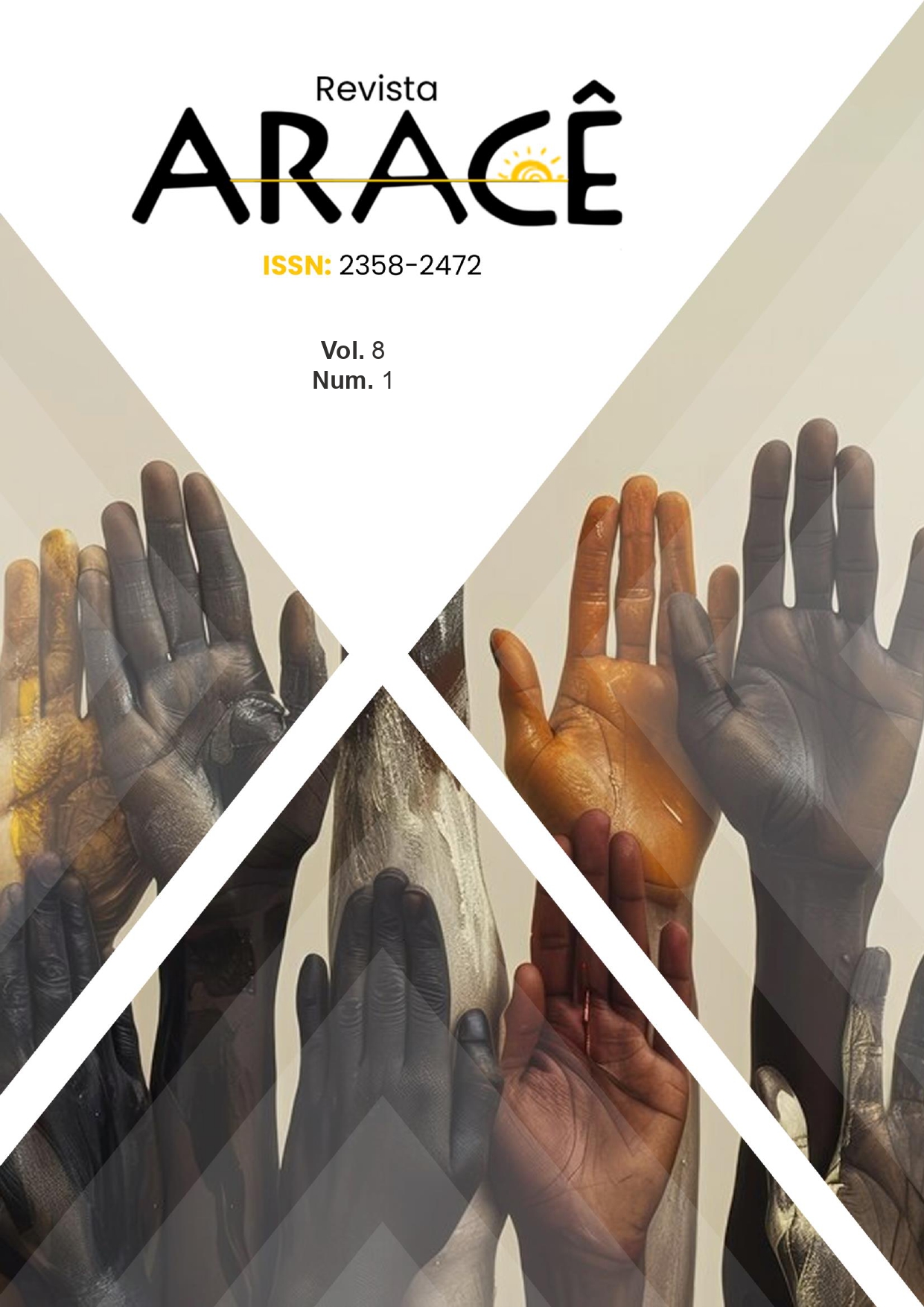
CALIBAN AND SYCORAX: THE COLLINIZATION OF THE LATIN AMERICAN BODY FROM THE PERSPECTIVE OF CRITICAL ENVIRONMENTAL EDUCATION
DOI:
https://doi.org/10.56238/arev8n1-084Keywords:
Colonialism, Intersectionality, Environmental Racism, Environmental EducationAbstract
This work constitutes a theoretical reflection aimed at understanding the historical and artistic processes that reinforce colonial violence. The debate proposed here is based on historical materialism in the Marxist tradition, pointing to colonial processes as a form of primitive accumulation of the capitalist system, contextualized in the exploitation of enslaved labor, the destruction of the original culture of the American peoples, and the kidnapping and killing of African populations. Colonialism stems from the slave system and the African diaspora, which lasted for centuries, in conjunction with the super-exploitation of women, historically configuring the same oppressor and the same exploitative hand of labor. This article considers the intersectional struggle of race and gender for overcoming the exploitation prevalent in the context of Critical and Freirean Environmental Education.
Downloads
References
CRENSHAW, Kimberle. A Intersecionalidade na Discriminação de Raça e Gênero. Revista Estudos Feministas. Salvador, n. 1, 2002.
DAVIS, Angela. Mulheres, Raça e Classe. São Paulo: Boitempo, 2016.
FANON, Frantz. Pele Negra, Máscaras Brancas. Salvador: EDUFBA, 2008.
FEDERICI, Silvia. O Calibã e a Bruxa: mulheres, corpo e acumulação primitiva. Tradução: Coletivo Sycorax. São Paulo: Elefante, 2017.
FERDINAND, Malcom. Uma Ecologia Decolonial: pensar a partir do mundo caribenho. São Paulo: Ed. Ubu, 2022.
FREIRE, Paulo. À sombra desta mangueira. 11. ed. Rio de Janeiro: Paz e Terra, 2015.
FREIRE, Paulo. Pedagogia do Oprimido. 50. Ed. Rio de Janeiro: Paz e Terra, 2012.
LAMB, Charles. Histórias de Shakespeare. Tradução Marcos Bagno. São Paulo: Ática, 2003.
LAYRARGUES. Philipe Pomier. Muito além da natureza: educação ambiental e reprodução social. Disponível em: https://www.ifbaiano.edu.br/unidades/valenca/files/2011/05/muito-alem-da-natureza_educacao-ambiental-e-reproducao-social.pdf
MBEMBE, Achille. NECROPOLÍTICA: Biopoder, soberania, estado de exceção, política da morte. São Paulo: N-1 Edições, 2018.
MARX, Karl. O capital: Critica de Economia política lirvo I: o processo de produção do capital. 2º Ed. São Paulo: Boitempo, 2017
STREK, Danilo. Cinco razões para dialogar com Paulo Freire. Revista e-curriculum. São Paulo, v. 7, n. 3, dezembro, 2011. Disponível em: http://revistas.pucsp.br/index.php/curriculum.